Brandon Blackstock's death at 48 puts spotlight on melanoma

The death of talent manager and producer Brandon Blackstock, Kelly Clarkson's ex-husband, at the age of 48, is shining a spotlight on melanoma.
Dan Hollis, the Butte-Silver Bow County coroner in Montana, confirmed to ABC News that Blackstock's cause of death was natural and due to melanoma. Hollis also said Blackstock died at his home in Butte, Montana, on Aug. 7.
The Blackstock family announced last Thursday that Brandon Blackstock had "bravely battled cancer for more than three years" and that he died "peacefully" and "was surrounded by family."

Read on for more information about melanoma.
What is melanoma?
Melanoma is a type of skin cancer that begins in the melanocytes, or the cells that produce melanin in the body, according to the Centers for Disease Control and Prevention. It is often caused by overexposure to ultraviolet or UV rays from the sun, sun lamps or tanning beds.
Melanoma is considered to be one of the deadliest forms of skin cancer, according to a 2024 study published in the journal BMC Cancer, because it tends to spread to other parts of the body. The CDC estimates about 8,000 people in the U.S. die from melanoma annually.
Skin cancer overall is the most common type of cancer in the U.S., according to the CDC.
Who is at risk for melanoma?
The CDC notes that anyone can get skin cancers like melanoma. Certain people may be more at risk for melanoma, including older adults; people with a family history or personal history with skin cancer; people with lighter skin or skin that easily reddens, burns or freckles; people with blue or green eyes or blond or red hair; and anyone who has a history of sunburns or tanning.
The importance of sunscreen
Because melanoma is often caused by UV rays, the American Academy of Dermatology stresses the use of sunscreen as one way to prevent skin cancers like melanoma.
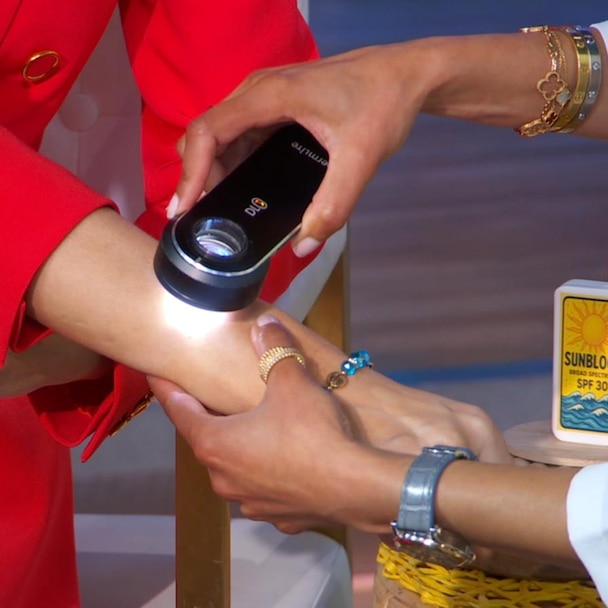


The AAD recommends using broad-spectrum and water-resistant sunscreen with an SPF of 30 or higher, applying at least a shot-glass amount of sunscreen, and re-applying every two hours when outdoors, swimming or sweating.
Additional ways to prevent skin cancer, according to the AAD, include wearing other forms of sun protection such as long-sleeved clothing, a wide-brimmed hat, and sunglasses; seeking shade, avoiding the sun midday when UV rays are the strongest; and avoiding tanning beds.
How to screen for melanoma
Some dermatologists recommend regular skin self-checks, especially for people who have a history of skin cancer. There is currently no standard guidance for skin checks, according to the CDC.
The AAD recommends self-screening for melanoma by following the "ABCDE" method:
Asymmetry: Look for any moles that are not symmetrical, or where half of the mole doesn't look like the other half.
Border: Look for any moles with irregular, ragged or scalloped borders.
Color: Look for any moles that vary in color, such as any with a red, white or blue color.
Diameter: Look for any moles that are more than 6 millimeters in diameter, about greater than the size of a pencil eraser.
Evolving: Look for any moles that have changed in any form or have started to itch or bleed.
How is melanoma diagnosed?
Doctors may examine any moles and look for potential signs of melanoma by using a magnifying dermatoscope or a visual aid device. Doctors will also likely take photos of any concerning moles and shave any concerning moles for a biopsy or tissue exam.
How is melanoma treated?
There are various treatment options for melanoma. According to the National Cancer Institute, doctors may treat melanoma with chemotherapy, immunotherapy, radiation, surgery or targeted therapy.