Northern lights could be visible in parts of the US tonight
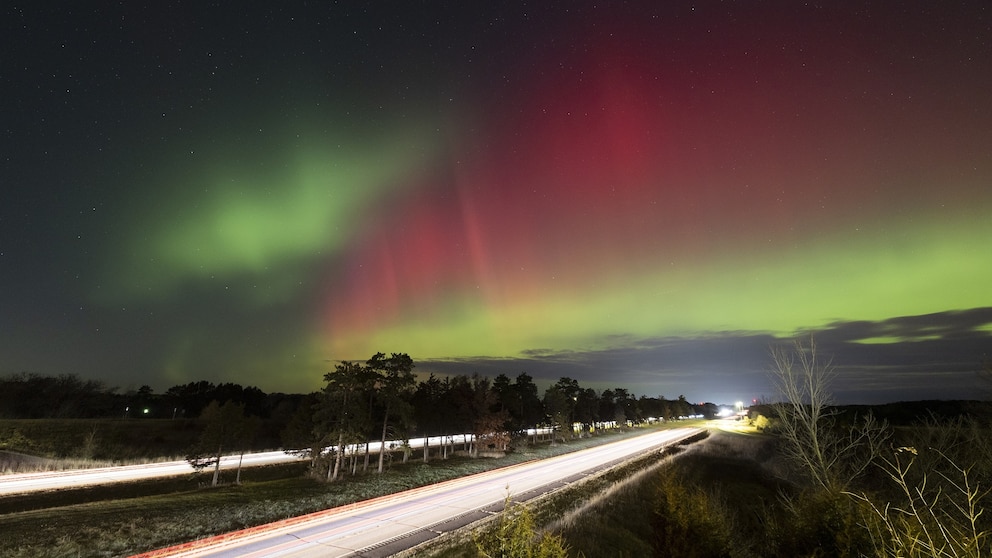
The northern lights could be visible in some parts of the United States on Wednesday night, giving some Americans a chance to catch a glimpse of the colorful phenomenon.
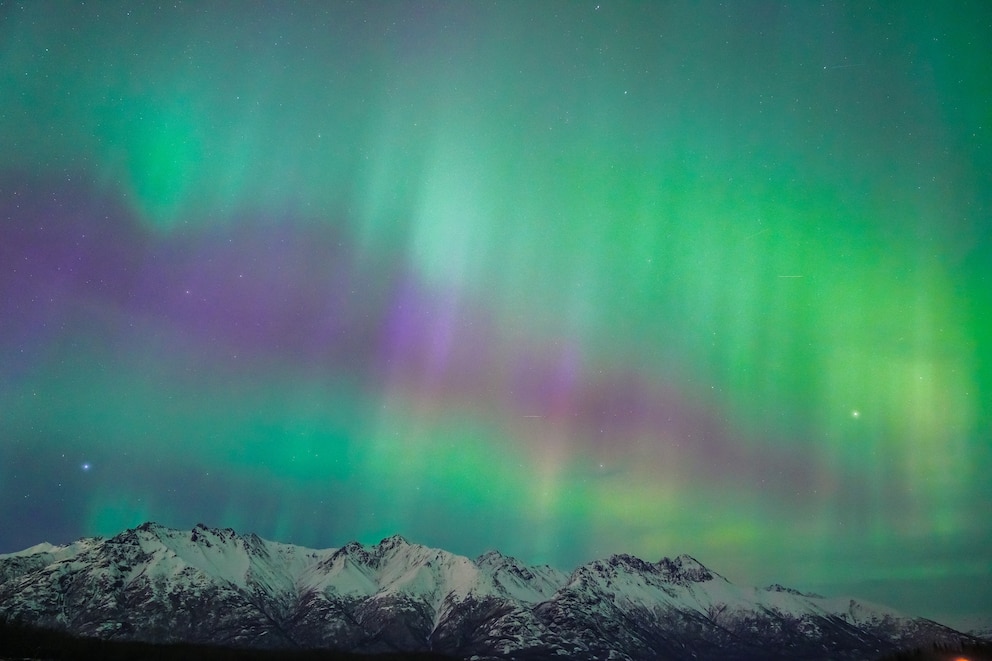
The National Oceanic and Atmospheric Administration's Space Weather Prediction Center is forecasting G1, or minor, geomagnetic storm conditions as solar activity increases overnight.
Where could the northern lights be visible?
According to NOAA's latest forecast, the northern lights could potentially be visible across parts of the northern U.S., particularly in areas near the Canadian border. NOAA says that under G1 conditions, aurora is commonly visible at high latitudes, including northern Michigan and Maine.
Some of the states are only within the low-likelihood portion of NOAA's forecast, meaning seeing the northern lights is not guaranteed.
NOAA said geomagnetic activity is expected to increase late Wednesday, with periods of minor geomagnetic storm conditions likely Thursday as the effects of a high-speed stream of solar wind strengthen.
What is the best time to see the northern lights?
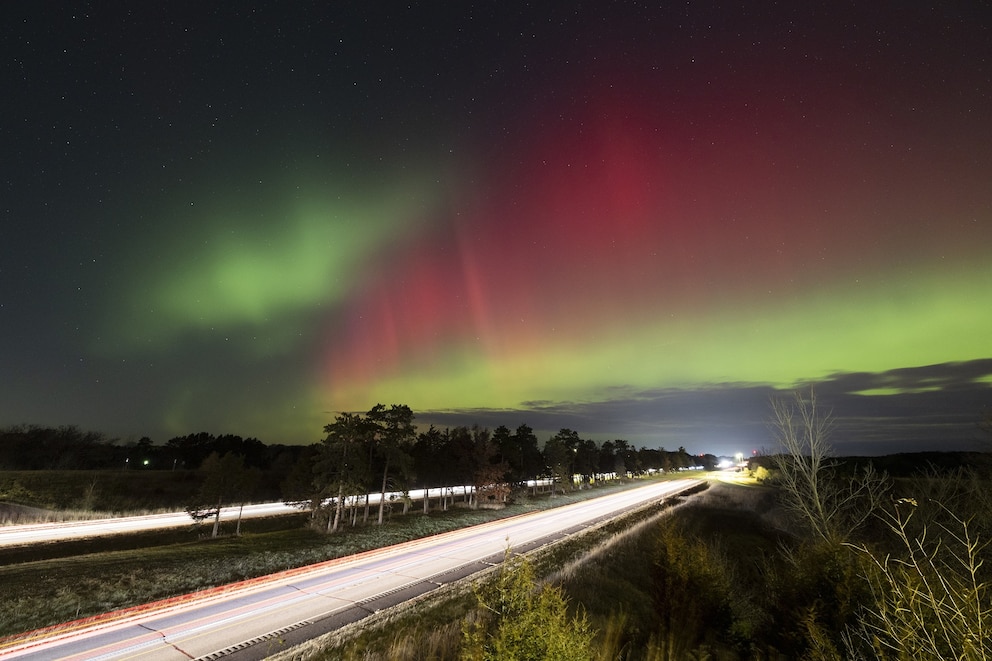
The best time to see the northern lights is typically within an hour or two of midnight, generally between 10 p.m. and 2 a.m. local time, according to NOAA.
For the best chance of seeing them, NOAA recommends finding a dark location away from city lights and looking toward the northern horizon.
Clear skies are also important, and NOAA recommends finding a spot with a clear view, such as the top of a hill.
What causes the northern lights?
The northern lights, also known as the aurora borealis, are colorful lights that appear in the night sky.They occur when electrically charged particles from the sun hit Earth’s atmosphere. Earth’s magnetic field pulls these particles towards the poles where they collide with atoms and molecules in Earth’s atmosphere and heat up, creating the glowing colors we see, mostly green, red and purple.
When geomagnetic activity becomes stronger, the northern lights can sometimes be seen farther south than usual.
Visibility can change quickly, so skywatchers can check NOAA's latest aurora forecast for updated conditions.