• Video
  • Shop
  • Culture
  • Family
  • Wellness
  • Food
  • Living
  • Style
  • Travel
  • News
  • Book Club
  • Newsletter
  • Privacy Policy
  • Your US State Privacy Rights
  • Children's Online Privacy Policy
  • Interest-Based Ads
  • Terms of Use
  • Do Not Sell My Info
  • Contact Us
  • Recalls and Product Safety Alerts
  • © 2026 ABC News
  • Living

2026 total solar eclipse: See photos from the Aug 12 event
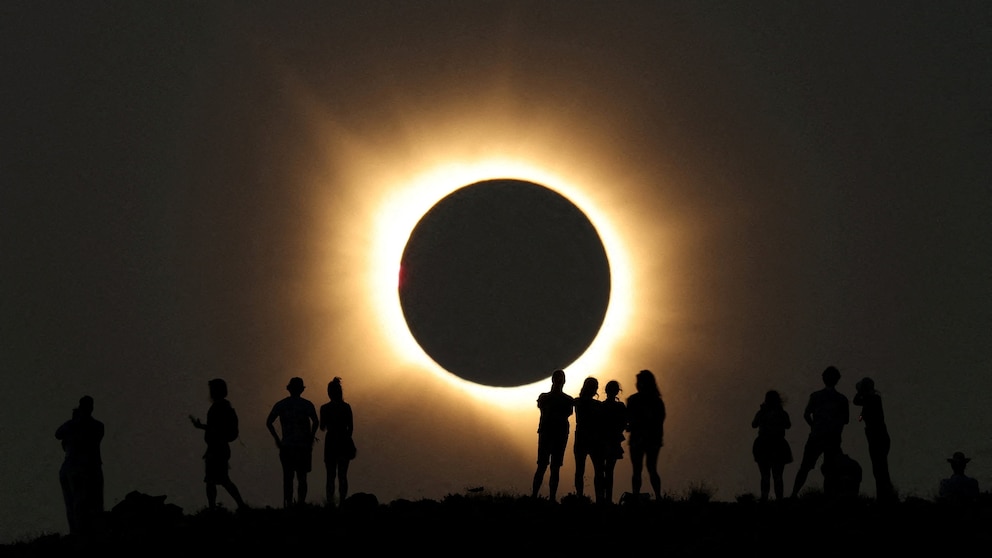
1:41
Wondrous moments inside path of totality for solar eclipse
Christian Hartmann/Reuters
ByShafiq Najib
August 12, 2026, 7:19 PM

A total solar eclipse  is sweeping across parts of the Northern Hemisphere Wednesday, giving millions of skywatchers in the path of totality a chance to witness one of the year's biggest celestial events.

Related Articles

'Ring of fire' solar eclipse to appear this week: When and how to see it

The Aug. 12 eclipse is visible in parts of Greenland, Iceland, Spain, Portugal and Russia, while people in parts of the United States can see a partial solar eclipse, according to NASA.

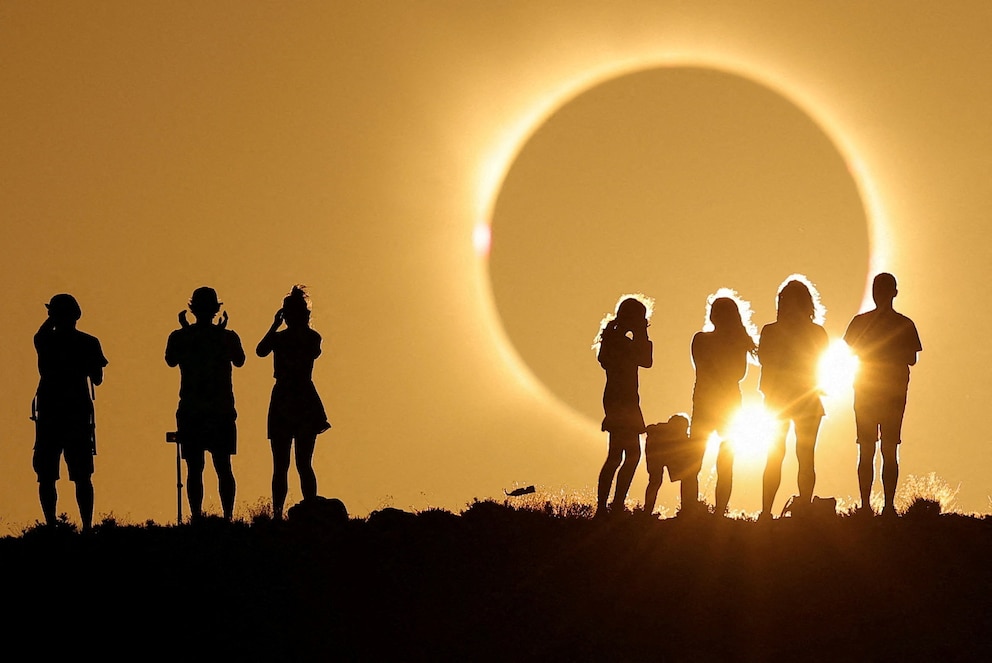
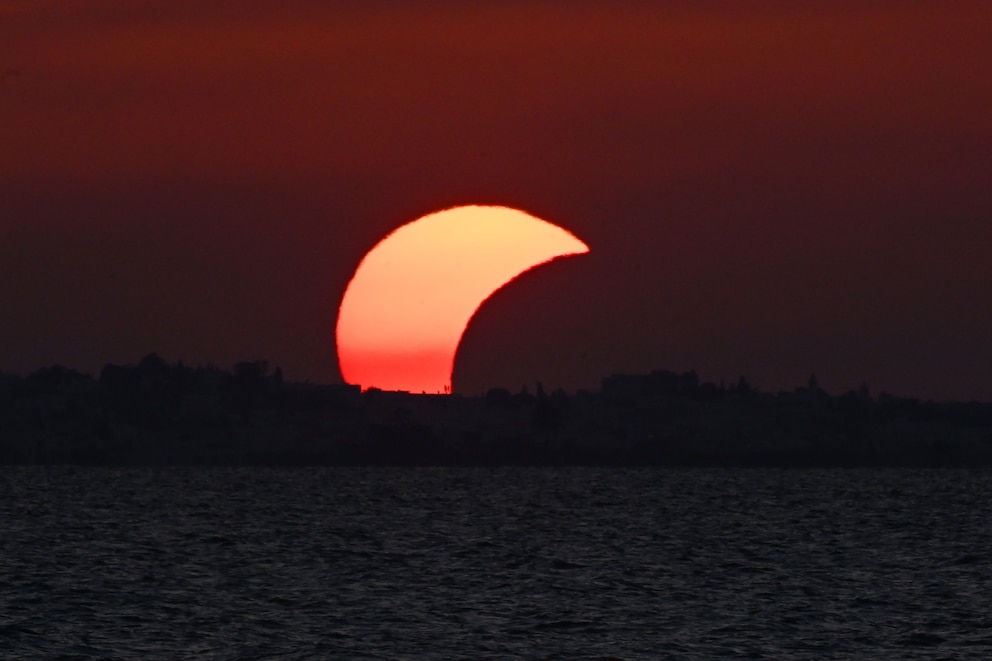
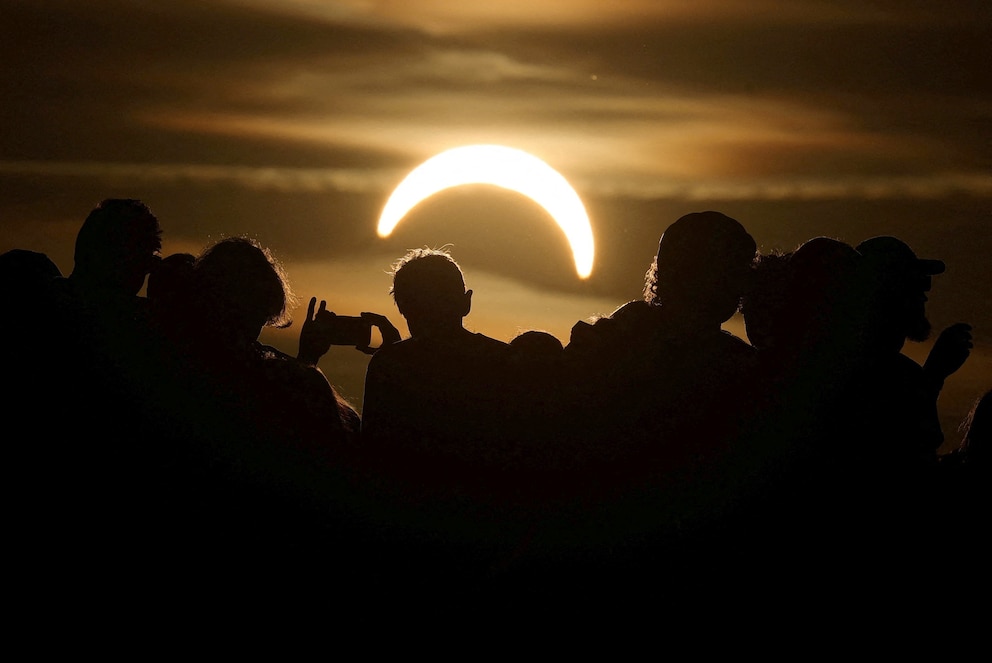
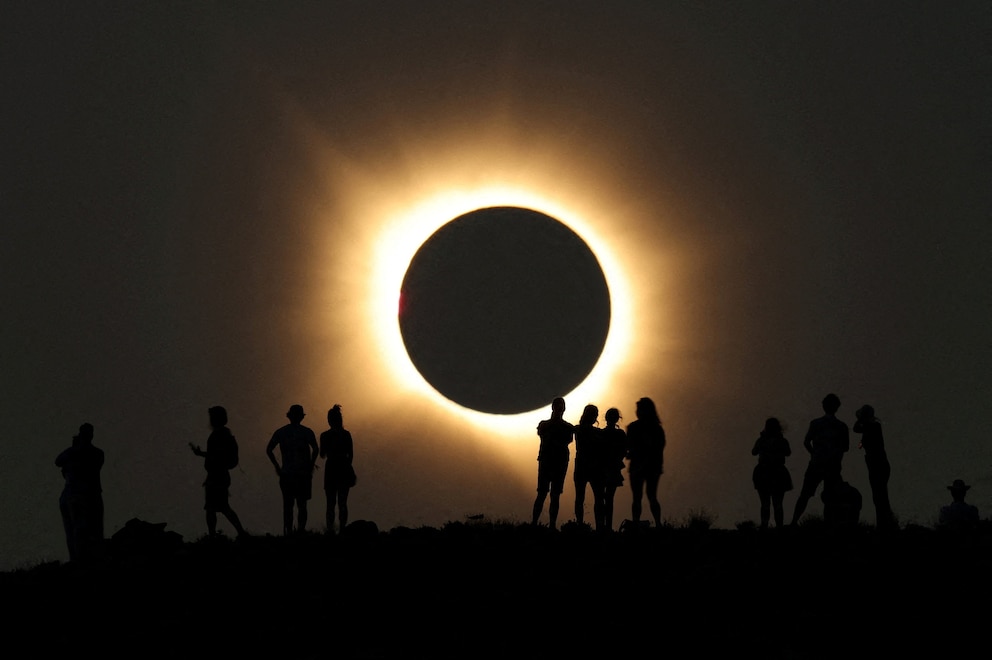
As the eclipse unfolds, photos are capturing the celestial spectacle and crowds gathering to watch it.

See photos of the 2026 total solar eclipse

The view of the eclipse varies depending on location, with only those within the path of totality able to see the sun completely blocked by the moon.
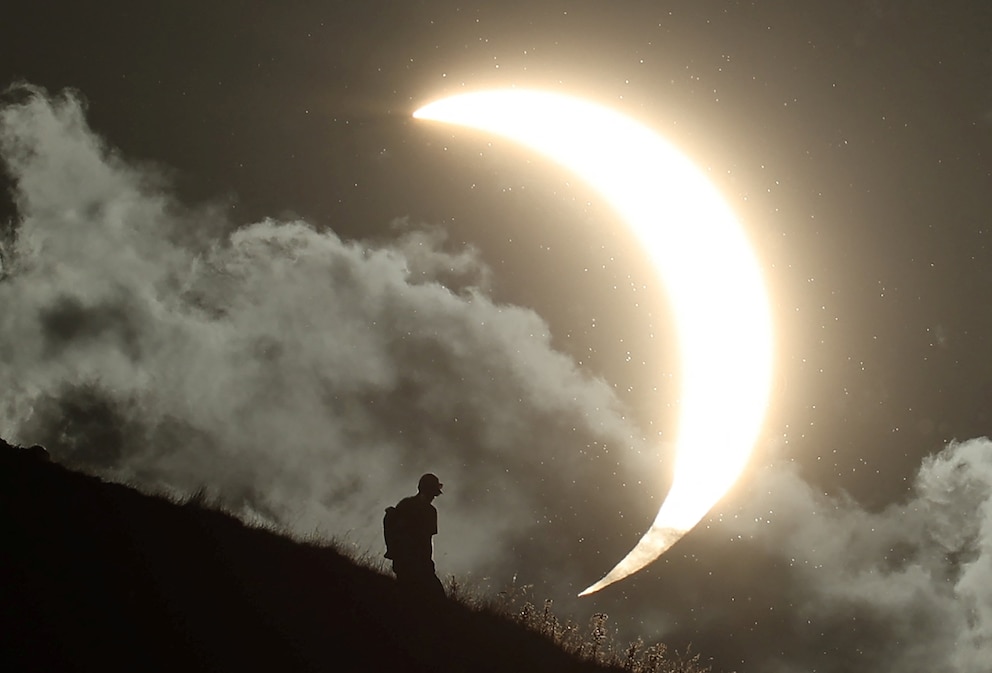
A person views a partial solar eclipse on Glastonbury Tor, in Glastonbury, Britain, August 12, 2026.
Toby Melville/Reuters
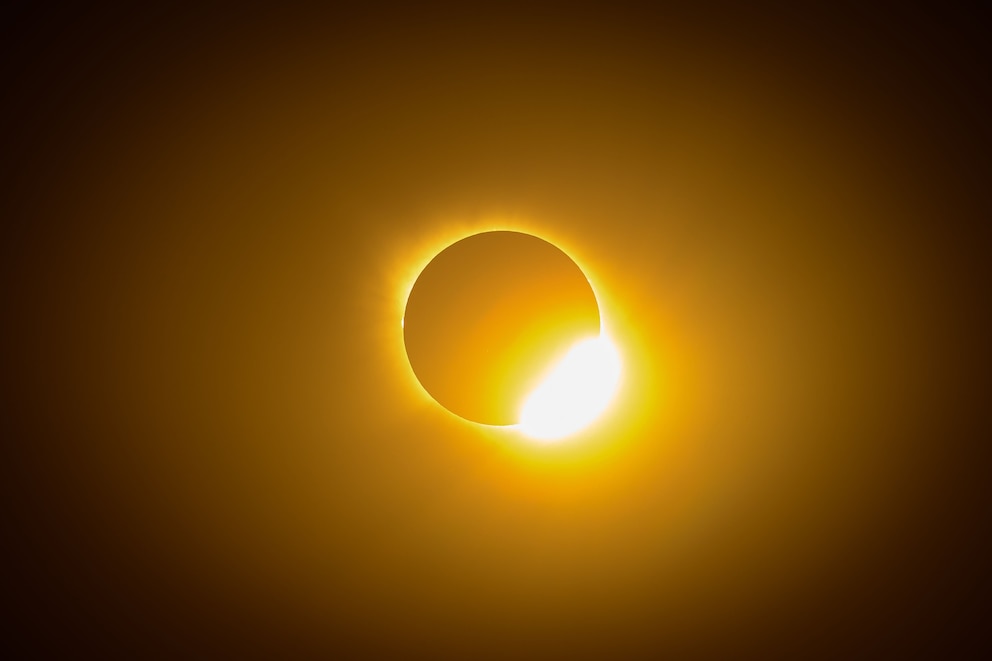
The moon covers the sun during a total solar eclipse in Palencia, Spain, Aug. 12, 2026.
Emilio Morenatti/AP Photo
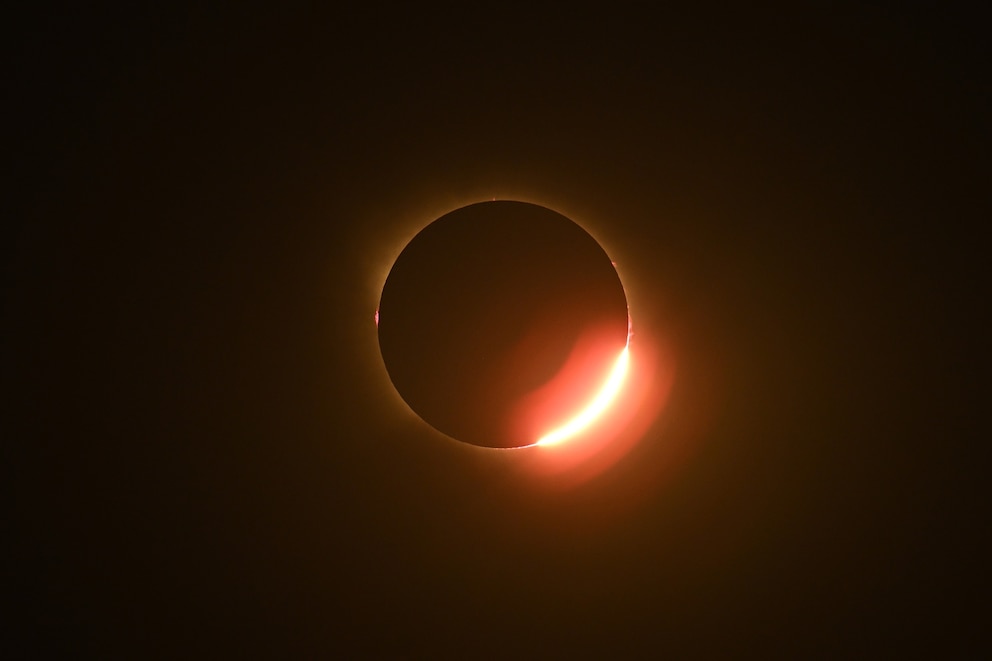
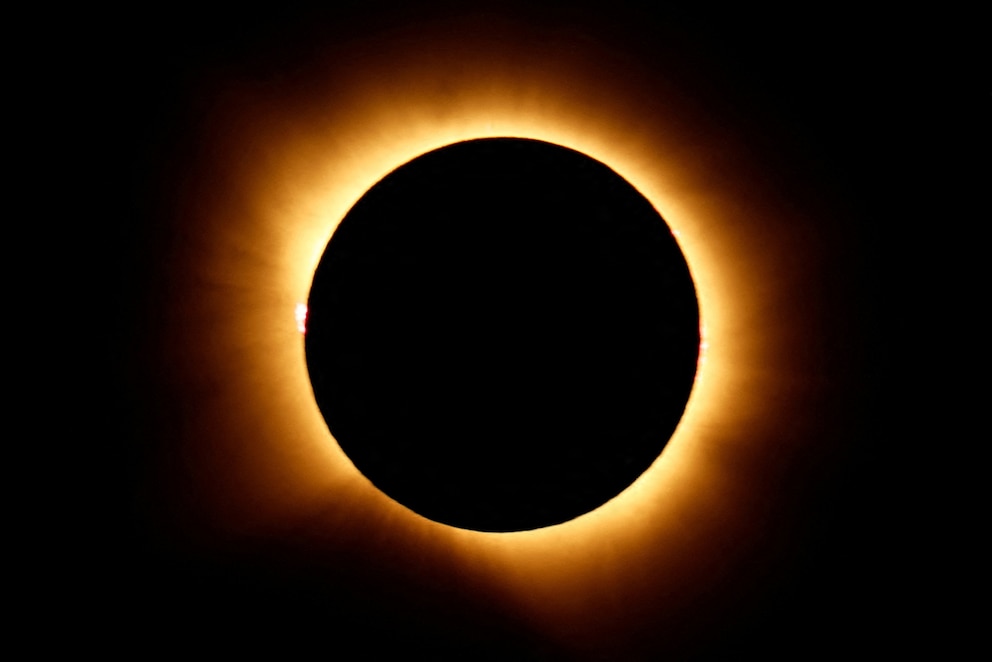
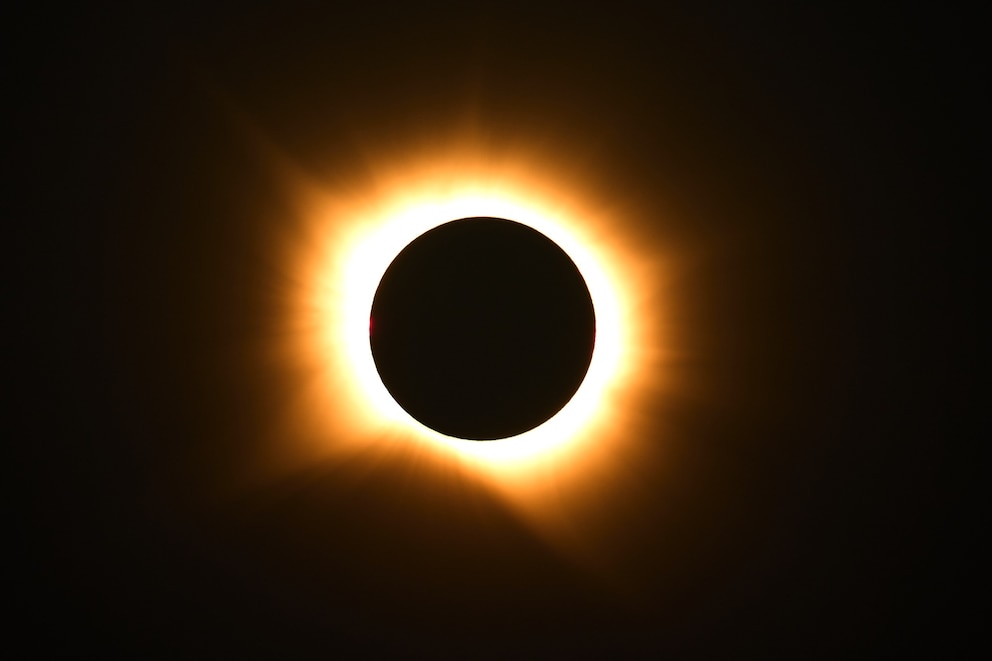
The moon completely covers the sun during a total solar eclipse as seen from the Javalambre Astrophysical Observatory in in Arcos de las Salinas, near Teruel, Spain, August 12, 2026.
Christian Hartmann/Reuters
A partial solar eclipse is seen at Soliman Beach in Tunisia's Nabeul province, August 12, 2026.
Fethi Belaid/AFP via Getty Images
The moon partially covers the sun during a partial solar eclipse, as seen from Berlin, Germany, August 12, 2026.
Fabrizio Bensch/Reuters
The moon completely covers the sun during a total solar eclipse as seen from the Javalambre Astrophysical Observatory in Arcos de las Salinas, near Teruel, Spain, August 12, 2026.
Christian Hartmann/Reuters
A total solar eclipse is seen August 12, 2026 in Palencia, Spain.
Leon Neal/Getty Images
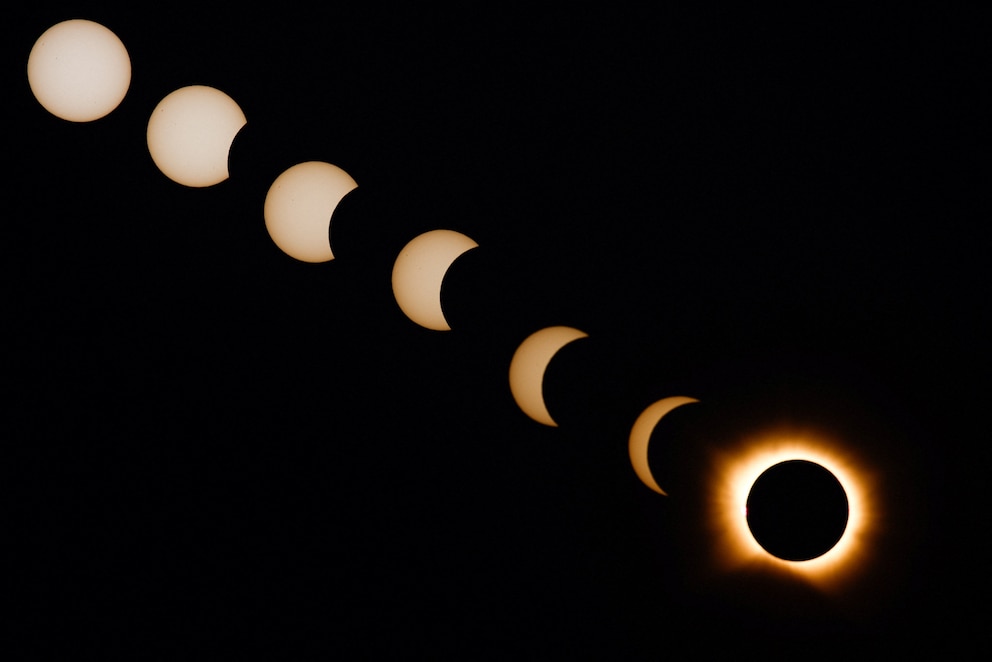
A composite image of seven separate photographs taken with a single fixed camera shows stages of a solar eclipse before and during totality, as seen from Arija, Spain, August 12, 2026.
Borja Suarez/Reuters
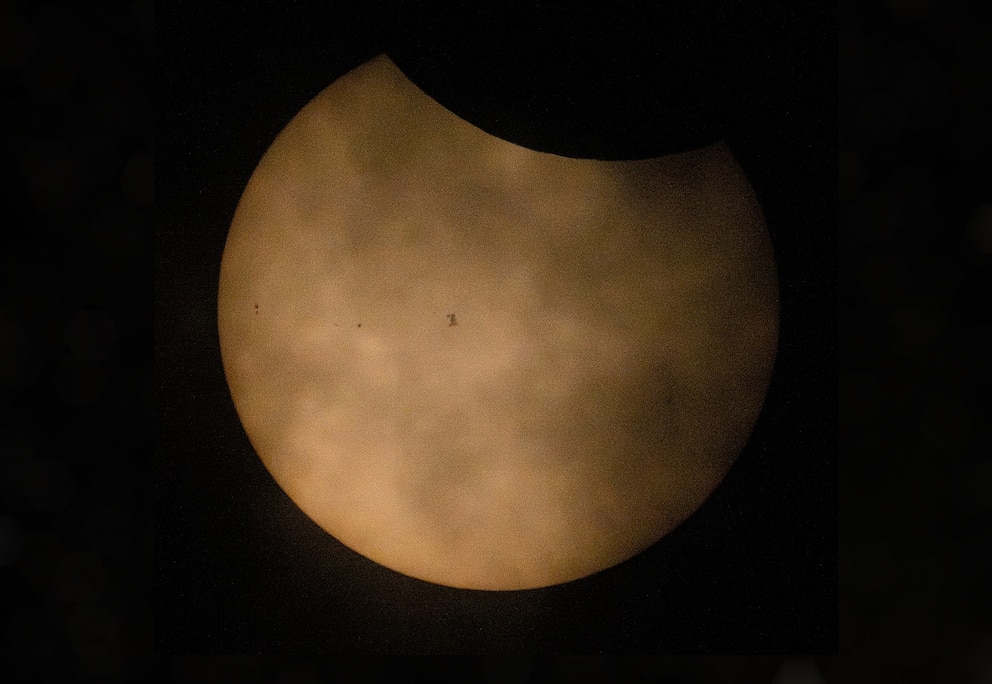
In this image of the sun during a partial solar eclipse and partially obscured by clouds, the International Space Station is seen in silhouette as it transits at roughly five miles per second, Aug. 12, 2026, near Hodgdon, Maine.
Joel Kowsky/NASA
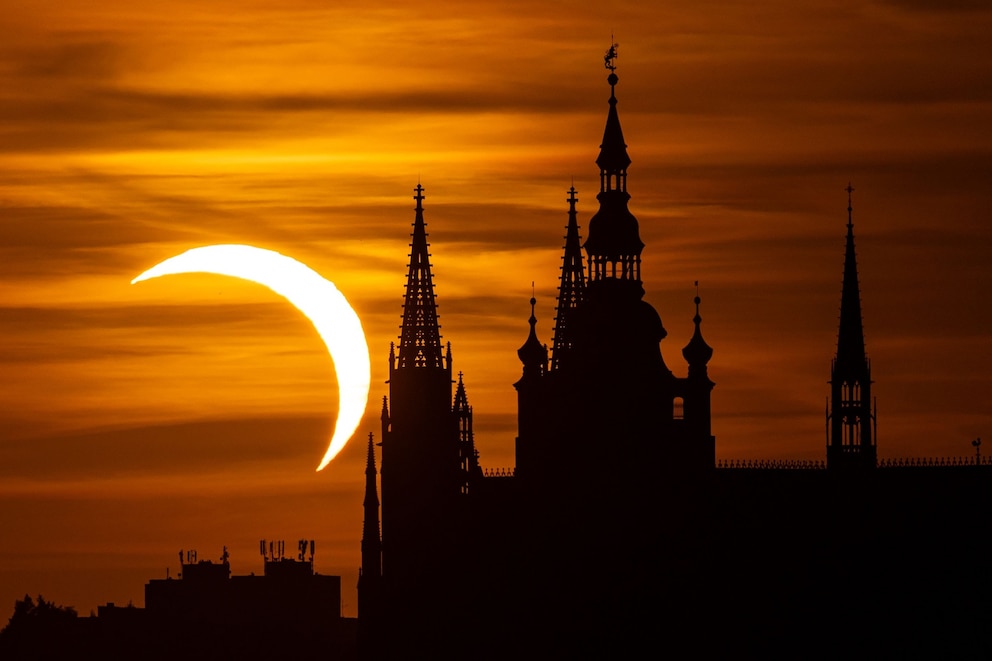
The Prague Castle is silhouetted against a partial solar eclipse in Prague, Czech Republic, August 12, 2026.
Martin Divisek/EPA/Shutterstock
The moon completely covers the sun during a total solar eclipse as seen from Arija, Spain, August 12, 2026.
Borja Suarez/Reuters
The moon partially covers the sun during a solar eclipse, as seen from A Coruna, Spain, August 12, 2026
Miguel Vidal/Reuters
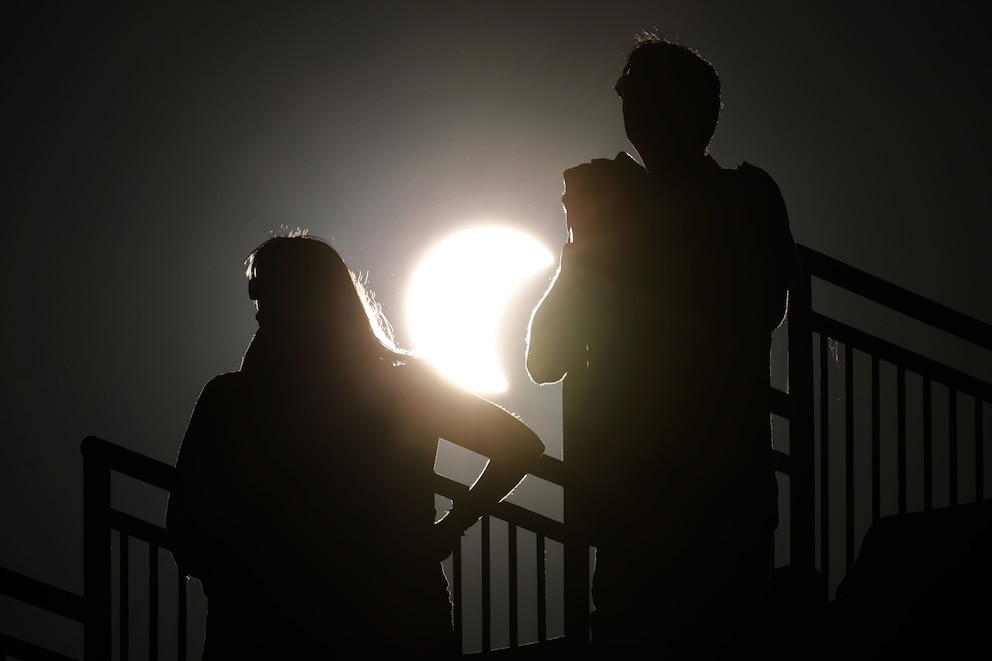
People watch the solar eclipse during the European Athletics Championships Birmingham 2026, in Birmingham, Britain, August 12, 2026.
Tolga Akmen/EPA/Shutterstock
A total solar eclipse is seen, August 12, 2026 in Palencia, Spain.
Leon Neal/Getty Images

Who can see the total solar eclipse?

NASA notes the total solar eclipse will be visible along a narrow path that stretches across Greenland, Iceland, the Atlantic Ocean, Spain, a small corner of Portugal and northern Russia.

People within the path of totality will see the moon completely cover the sun for a brief period, turning daytime skies dark.

Where can you see the eclipse in the U.S.?

Parts of the northern United States, from Alaska to North Carolina, will experience a partial solar eclipse on Wednesday, according to NASA.

The timing and amount of the sun covered by the moon will vary depending on location. In Anchorage, Alaska, the partial eclipse will begin at 7:36 a.m. local time and reach its maximum at 8:21 a.m., with about 28% of the sun covered. In New York City, it will begin at 1:07 p.m. and peak at 1:54 p.m., with about 9% coverage.
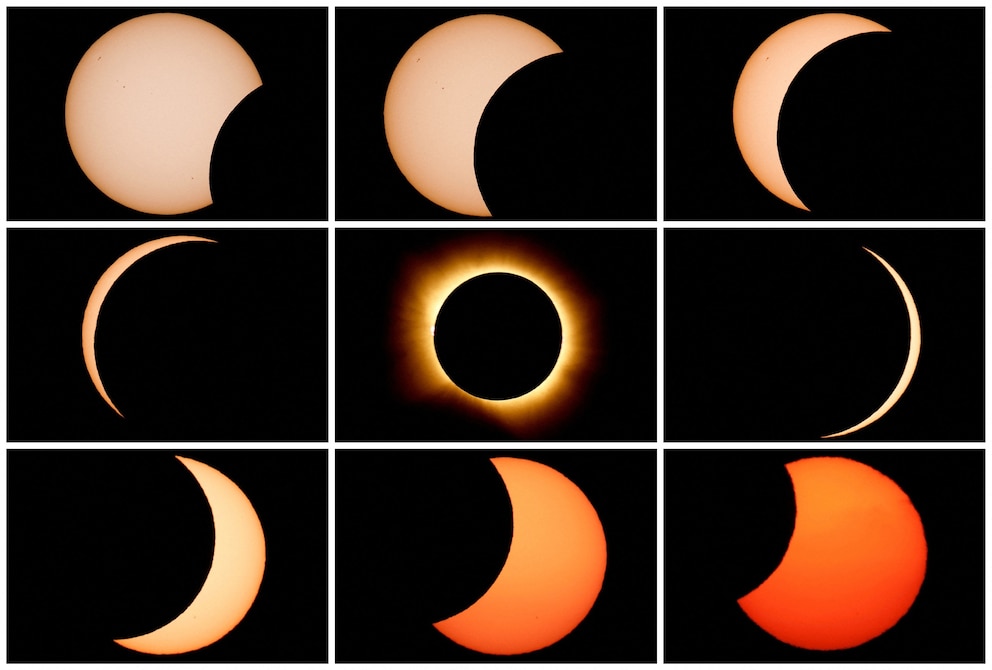
A combination picture shows different stages of a total solar eclipse, as seen from Arija, Spain, August 12, 2026.
Borja Suarez/Reuters

Other cities where the partial eclipse will be visible include Boston, Philadelphia, Washington, D.C., Detroit and Portland and Bangor, Maine.

What is a solar eclipse?

A solar eclipse occurs when the moon passes between the Earth and the sun, casting a shadow on Earth that fully or partially blocks the sun, according to NASA.

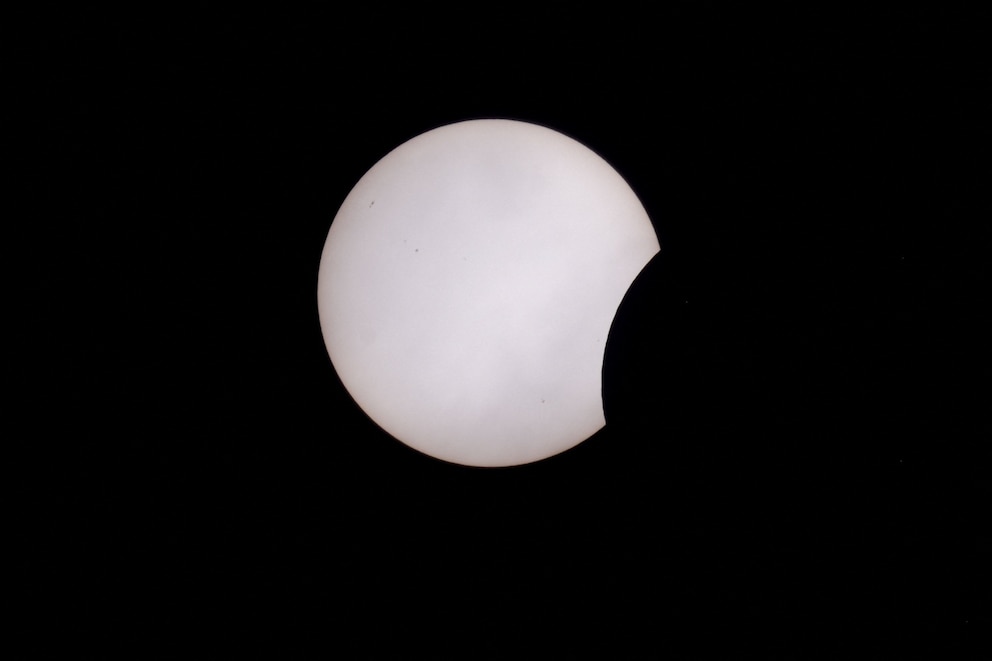
A total solar eclipse happens when the moon completely covers the sun for observers within the path of totality. Outside that path, people see a partial solar eclipse, where only part of the sun is obscured.

Do you need eclipse glasses?
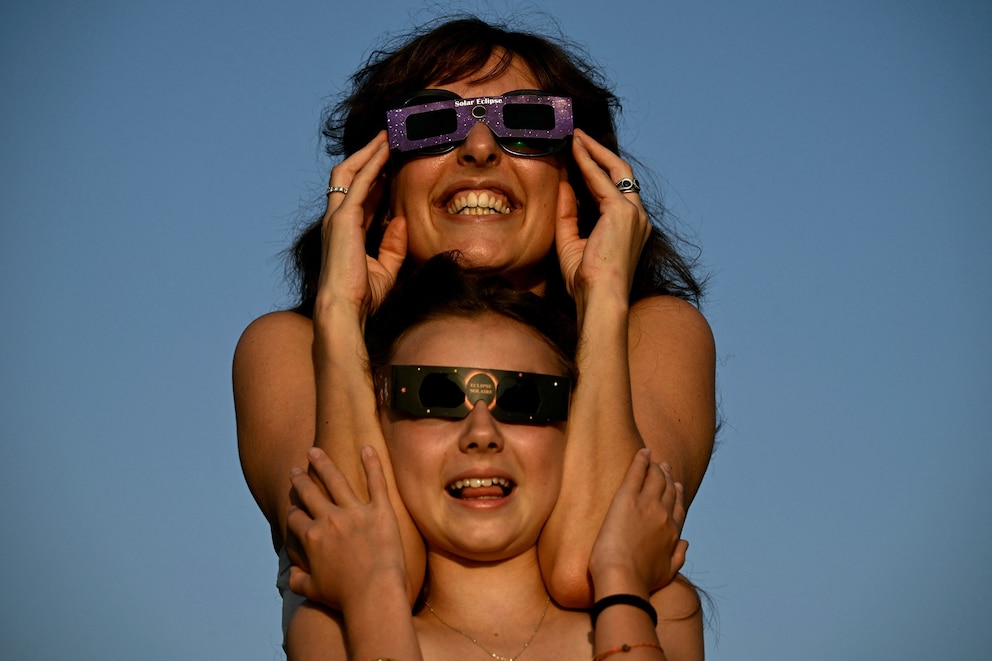
People use solar eclipse viewing glasses to look at the partial solar eclipse at Abbadia, le Château Observatoire in Hendaye, southwestern France, August 12, 2026.
Philippe Lopez/AFP via Getty Images

Yes. Anyone viewing a partial solar eclipse should wear certified solar eclipse glasses or use a handheld solar viewer that meets the ISO 12312-2 international safety standard, NASA recommends. Regular sunglasses are not safe for viewing the sun.

The agency says the only time it is safe to view the sun without certified eclipse glasses is during totality, when the moon completely covers the sun. Since the Aug. 12 eclipse will be partial across the United States, viewers should wear eclipse glasses throughout the event.


Angela, David and their son, Diego, 7, pose for a selfie with protective eclipse glasses during the watch party for the solar eclipse, in Buitrago del Lozoya, Spain, August 12, 2026.
Susana Vera/Reuters
A person watches as the moon passes over the sun during a partial solar eclipse on the Noirmoutier Island, west of France, August 12, 2026.
Ludovic Marin/AFP via Getty Images

When was the last total solar eclipse visible in the U.S.?

The last total solar eclipse visible from the United States occurred on April 8, 2024, when the path of totality crossed 15 states from Texas to Maine, according to NASA.

Related Articles

105-year-old Texas man prepares for his 13th total solar eclipse on April 8

When is the next total solar eclipse in the U.S.?

The next total solar eclipse visible from any part of the United States will occur on March 30, 2033, when totality will be visible only in Alaska, NASA says.

The next total solar eclipse visible from the contiguous United States is expected on Aug. 23, 2044. Another coast-to-coast total solar eclipse will follow on Aug. 12, 2045.


Related Topics

  • Solar Eclipse
  • Space

Up Next in Living—

Move over 'FIRE' method: Why Gen Z is embracing 'soft saving'

August 13, 2026

Teens wow with scholarship-winning duct tape prom outfits

August 12, 2026

2026 total solar eclipse: See photos from the Aug 12 event

August 12, 2026

Mom of 4 shares how 'moneymaxxing' helps her save

August 12, 2026

Shop GMA Favorites

ABC will receive a commission for purchases made through these links.

Sponsored Content by Taboola

The latest lifestyle and entertainment news and inspiration for how to live your best life - all from Good Morning America.
  • Contests
  • Terms of Use
  • Privacy Policy
  • Do Not Sell My Info
  • Children’s Online Privacy Policy
  • Advertise with us
  • Your US State Privacy Rights
  • Interest-Based Ads
  • About Nielsen Measurement
  • Press
  • Feedback
  • Shop FAQs
  • ABC News
  • ABC
  • All Videos
  • All Topics
  • Sitemap
  • Recalls and Product Safety Alerts

© 2026 ABC News
  • Privacy Policy— 
  • Your US State Privacy Rights— 
  • Children's Online Privacy Policy— 
  • Interest-Based Ads— 
  • Terms of Use— 
  • Do Not Sell My Info— 
  • Contact Us— 
  • Recalls and Product Safety Alerts— 

© 2026 ABC News