Prince Harry, Elton John lose yearslong case against UK tabloid publisher
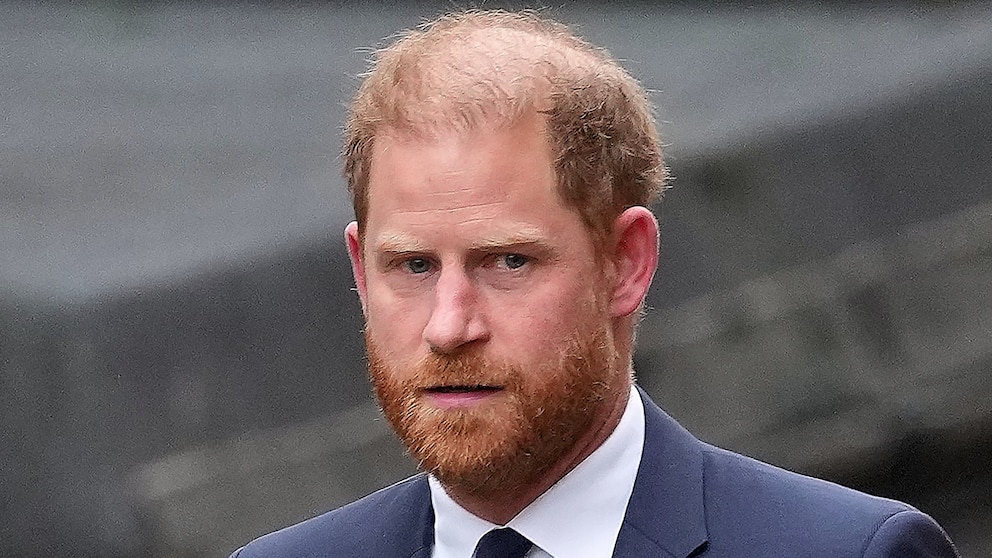
A four-year legal battle brought by Prince Harry and other celebrities including Elton John, Sadie Frost and Elizabeth Hurley against a U.K. tabloid publisher ended Tuesday in a U.K. courtroom.
Harry and six other defendants lost their High Court privacy case against Associated Newspapers Limited, the publisher of the Daily Mail and Mail on Sunday, which they had accused of unlawful information gathering.
All of the claims were dismissed after the judge determined the plaintiffs had insufficient evidence to prove the allegations.
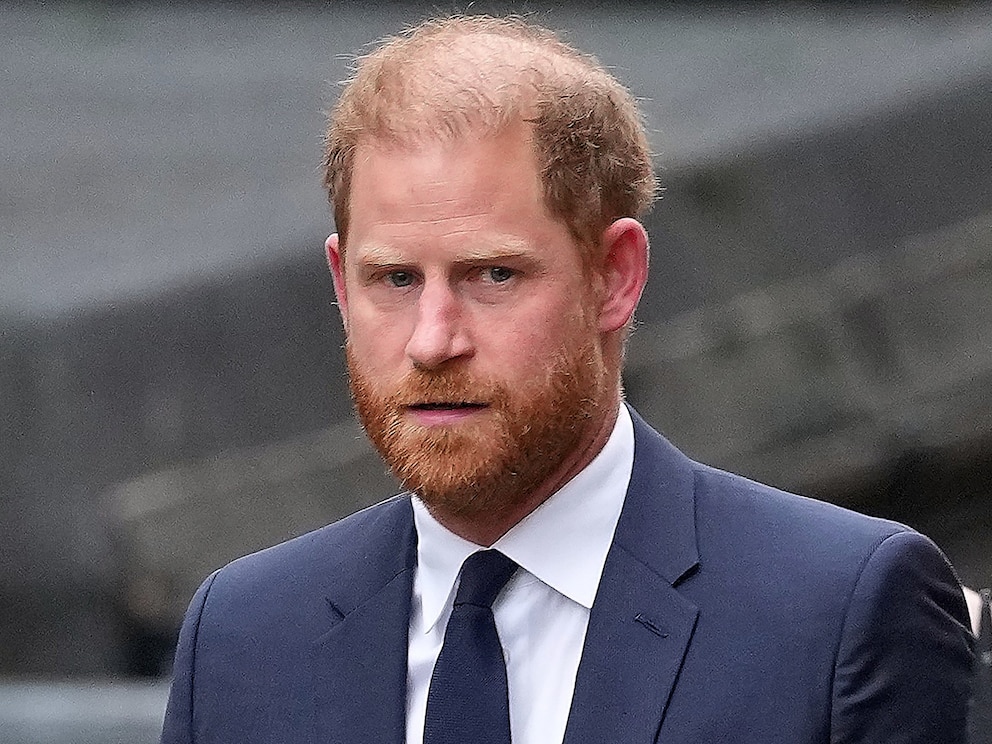
Harry – who is currently in London for a series of charity-related engagements -- responded to the ruling in a joint statement Tuesday with one of his fellow claimants, Baroness Doreen Lawrence, calling the decision a "complete and obvious whitewash."
"We came to Court seeking justice and accountability. But we have received neither. This judgment represents a complete reversal of the position which previous Judges have taken in relation to the hacking claims successfully brought against both News Group Newspapers and Mirror Group Newspapers (who were represented by, at the time, the Judge who made this decision)," the statement said, in part. "Generic findings about various private investigators that were held by the Courts in these parallel claims to have carried out unlawful activity at the very same time in relation to similar stories and well-known individuals have been wholly ignored. The fact that this Court has chosen to dismiss them represents an inconsistency which is hard to understand or reconcile with common sense, or the evidence heard in the court room itself."
The statement continued, "It is a complete and obvious whitewash, but sadly not altogether unexpected. However, the lengths to which the Court has gone to exonerate the Mail is as shocking as it is totally unwarranted."
In its own statement, Associated Newspapers called the ruling an "overwhelming victory" and a "magnificent vindication." The publisher described the allegations of unlawful information gathering as "outrageous" and said "no credible evidence was ever presented."
"As we said [when the case was first filed], these allegations were 'lurid' and 'preposterous,' and were a fishing expedition by the claimants and their legal teams in a politically motivated campaign to muzzle the free press," the publisher said.
It added, "The reputations of our decent and hard-working journalists were terribly impugned, and today they have been exonerated. As the judgement clearly shows, every single article was legitimately sourced."
Associated Newspapers also said it plans to seek recovery of its legal costs, which it said total more than $60 million.
Harry and six other parties first launched legal action in 2022, accusing the publisher of allegedly hiring private investigators who they claim used unlawful means to gather information on them in the late 1990s and early 2000s, including secretly placing listening devices inside cars and homes and allegedly paying police officials for inside information.
Associated Newspapers denied all allegations from the plaintiffs, calling them "preposterous," and says the claims are "unsubstantiated and highly defamatory" and "based on no credible evidence."
In his judgment Tuesday, High Court Justice Matthew Nicklin said Harry and his fellow claimants had "failed to prove their pleaded allegations of UIG [unlawful information gathering]."
"The Court rejected the attempt to prove the claims by broad inference where there remained a legitimate and realistic possible lawful source pathway, or where the article-specific evidence did not prove that the relevant information must have been obtained unlawfully," Nicklin wrote. "The Court also held that the parties were bound by the cases they had pleaded. It was not permissible, at trial, to replace a pleaded allegation with a different, and in many instances more serious, allegation of UIG."
Harry traveled from California, where he now lives full-time, to London to testify in the case in January. In his testimony, Harry invoked the experiences of his wife Meghan, the Duchess of Sussex, and his mother, the late Princess Diana, who died in a car crash on Aug. 31, 1997, at the age of 36, while being pursued by paparazzi in Paris.
"I think it's fundamentally wrong [for Associated Newspapers Limited] to put us through this again when all we [claimants] required is an apology and some accountability," Harry said at the conclusion of his testimony. "It's a horrible experience and the worst bit of it is, by standing up here, they continue to come after me and make my wife's life an absolute misery."
The trial also included additional testimony from Harry's fellow plaintiffs, including Hurley and John.